Home Safety Checklists for Seniors
Key Highlights
- Home accidents are a leading cause of injury among seniors, making prevention essential.
- Common hazards include slips, trips, falls, poor lighting, and unsafe bathroom setups.
- Simple home modifications and safety checks can significantly reduce risks.
- Family involvement and regular inspections are critical for maintaining a safe environment.
- Real-life examples show how proactive home safety interventions prevent injuries and enhance independence.
As we age, maintaining a safe home environment becomes increasingly important. Seniors are at higher risk for accidents at home, which can lead to serious injuries, hospitalizations, or loss of independence. Fortunately, many accidents are preventable through regular home safety checks, simple modifications, and proactive planning. This guide provides detailed checklists, practical tips, and real-world examples to help families ensure the safety of their older loved ones.
Why Home Safety Is Crucial for Seniors
Statistics show that:
- Falls are the leading cause of injury among adults 65 and older.
- Approximately one in four seniors experiences a fall each year.
- Many falls occur at home, especially in bathrooms, kitchens, and stairways.
Age-related changes contribute to increased risk:
- Decreased balance and mobility: Seniors are more prone to trips and slips.
- Reduced vision and hearing: Hazards may be harder to detect.
- Medication side effects: Dizziness or low blood pressure can increase fall risk.
- Chronic conditions: Arthritis, neuropathy, or cognitive impairment may impair movement.
Example from practice: In our sessions, a senior client tripped over a loose rug in the living room. After removing loose rugs and installing non-slip mats, no further falls occurred over six months.
Key Areas to Check for Home Safety
1. Entrances and Hallways
- Ensure walkways are clear of clutter.
- Install handrails and grab bars where needed.
- Check that floors are even and free of tripping hazards.
- Adequate lighting, including nightlights in hallways.
Case study: A 77-year-old client often used hallways at night. Installing motion-sensor nightlights reduced nighttime trips and improved independence.
2. Living Room and Common Areas
- Remove loose rugs or secure them with non-slip backing.
- Keep electrical cords away from walkways.
- Arrange furniture to allow easy navigation with walkers or canes.
- Use bright lighting and consider task lighting near seating areas.
3. Kitchen Safety
- Store frequently used items at waist height to avoid bending or reaching.
- Ensure the floor is dry and free of spills.
- Use sturdy, non-slip step stools when reaching high shelves.
- Consider appliances with safety features, such as auto shut-off.
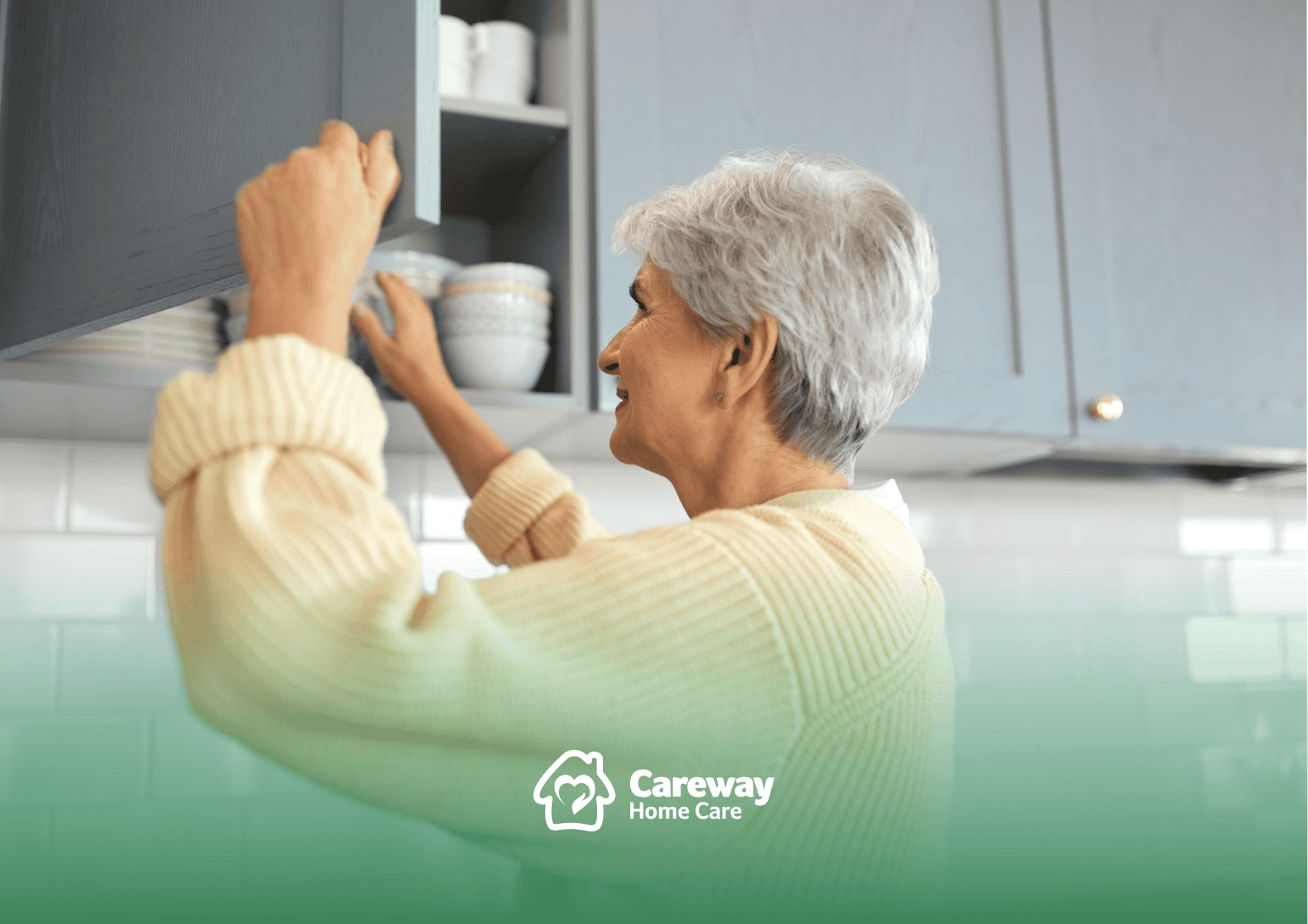
Example from practice: In our experience, a senior client repeatedly slipped while reaching for high shelves. Installing pull-down shelves and keeping commonly used items within reach eliminated the hazard.
4. Bathroom Safety
- Install grab bars in the shower, bathtub, and near the toilet.
- Use non-slip mats inside and outside the shower or bathtub.
- Consider raised toilet seats or shower chairs if mobility is limited.
- Ensure adequate lighting and nightlights for nighttime bathroom use.
Real-world insight: A 79-year-old client with arthritis began using a shower chair and grab bars, reducing fall risk and making bathing safer and less stressful.
5. Bedroom Safety
- Keep pathways clear and free of clutter.
- Place nightlights near the bed for safe navigation.
- Ensure the bed height allows for easy entry and exit.
- Use sturdy furniture for support when standing or sitting.
6. Stairs and Steps
- Install secure handrails on both sides of the stairs.
- Ensure steps are uniform in height and free of obstacles.
- Use non-slip strips or treads on each step.
- Keep stairways well-lit; consider motion-sensor lighting.
Case study: In one home, a senior client was hesitant to use stairs due to fear of falling. After installing handrails and non-slip treads, the client regained confidence and safely navigated the stairs daily.
7. Emergency Preparedness
- Keep a phone within reach in every room.
- Post emergency numbers visibly.
- Consider medical alert devices for high-risk individuals.
- Review evacuation plans for fires or other emergencies.
Home Safety Checklist at a Glance
| Area | Safety Actions | Example from Practice |
|---|---|---|
| Entrances & Hallways | Clear walkways, add handrails, and adequate lighting | Nightlights installed reduced nighttime trips |
| Living Room | Remove loose rugs, clear cords, and arrange furniture | Rearranging furniture improved mobility |
| Kitchen | Keep items at waist height, non-slip floors | Pull-down shelves reduced slip risk |
| Bathroom | Grab bars, non-slip mats, shower chair | Shower chair prevented falls |
| Bedroom | Clear pathways, nightlights, and proper bed height | Nightlights improved safe nighttime navigation |
| Stairs | Handrails on both sides, non-slip treads | Confidence restored for stair use |
| Emergency | Phone access, emergency numbers, alert devices | A quick response is possible with an alert device |
Additional Tips for Families
- Conduct regular safety checks every 3–6 months.
- Involve seniors in the process to understand their needs and preferences.
- Address hazards promptly rather than delaying fixes.
- Consider professional assessments from occupational therapists or home care providers.
- Educate all family members and caregivers on safe practices.
Example: In our sessions, families who performed quarterly safety audits reported fewer accidents and increased confidence in their loved one’s independence.
Final Thoughts
Accidents at home can have serious consequences for seniors, but many are preventable through proactive planning and home safety modifications. Families play a critical role in ensuring a secure environment by performing regular safety checks, making necessary adjustments, and educating both seniors and caregivers. Careway Home Care can assist with home safety assessments, implement modifications, and provide ongoing monitoring to help seniors maintain independence and reduce the risk of injury. Contact us today!
Frequently Asked Questions
1. What are the most common causes of home accidents for seniors?
Slips, trips, falls, burns, and accidents in bathrooms or kitchens are the most frequent causes.
2. How often should a home safety check be conducted?
Ideally, every 3–6 months or after any change in health, mobility, or home environment.
3. Are grab bars necessary if seniors are mobile?
Yes. Grab bars provide extra support, prevent slips, and give confidence even for mobile seniors.
4. How can families make home safety changes without major renovations?
Simple adjustments like removing loose rugs, improving lighting, adding non-slip mats, and installing grab bars can make a big difference.
5. Should seniors with cognitive decline have additional precautions?
Yes. Supervision, clearly marked pathways, motion-sensor lights, and alert devices are highly recommended.
Sources:
- https://www.cdc.gov/falls/data-research/index.html
- https://www.mayoclinic.org/healthy-lifestyle/healthy-aging/in-depth/aging/art-20046070
- https://www.mayoclinichealthsystem.org/hometown-health/speaking-of-health/household-safety-checklist-for-senior-citizens
- https://www.healthinaging.org/tools-and-tips/tip-sheet-home-safety-tips-older-adults
- https://www.aarp.org/caregiving/home-care/safety-tips/