Daily Living Aids for Seniors to Maintain Independence at Home
Key Highlights
- Daily living aids help seniors perform everyday tasks safely while preserving dignity and independence.
- Simple tools like grab bars, reachers, and jar openers can prevent falls and reduce physical strain.
- Bathroom and kitchen modifications are among the highest-impact investments for aging in place.
- Technology aids, from medication dispensers to voice assistants, are now accessible even for seniors unfamiliar with digital tools.
- The right combination of aids varies by individual; a professional assessment often reveals needs families overlook.
- Independence at home isn’t just about convenience — it’s directly tied to mental health, cognitive function, and longevity.
Why Daily Living Aids Matter More Than Most Families Realize
Aging in place is what most seniors want. Surveys consistently show that the overwhelming majority of older adults prefer to stay in their own homes for as long as possible.
But wanting to stay home and being able to stay home safely are two very different things.
That’s where daily living aids come in. These are the tools, devices, and adaptations that help seniors continue doing the ordinary things that make up an ordinary life, bathing, cooking, dressing, walking to the mailbox, without struggle, injury, or the quiet frustration of needing to ask for help.
In our years supporting seniors and their families, we’ve seen something remarkable: a $15 jar opener or a properly installed grab bar can sometimes be the difference between a senior thriving at home and a senior reluctantly considering assisted living.
Small tools, big outcomes.
The Real Cost of Skipping These Aids
Before we walk through the specific tools, it’s worth understanding what’s at stake.
Falls are the leading cause of injury-related death among adults 65 and older in the United States, according to the Centers for Disease Control and Prevention. One in four older adults falls each year, and falls are responsible for roughly 3 million emergency room visits annually.
Many of those falls happen in the bathroom, kitchen, or on stairs — the exact places daily living aids are designed to protect.
Beyond the physical toll, there’s the emotional cost. When seniors start avoiding certain activities because they feel unsafe, their world shrinks. They stop cooking the meals they used to love. They stop showering as often. They stop inviting friends over.
That withdrawal accelerates decline.
The right aids reverse that pattern.
Mobility Aids: The Foundation of Independence
Getting around the home safely is the starting point for everything else.
- Canes remain the most common mobility aid, but they’re often chosen incorrectly. A cane should reach from the floor to the crease of the wrist when the arm hangs naturally. Too tall or too short, and it becomes a fall hazard.
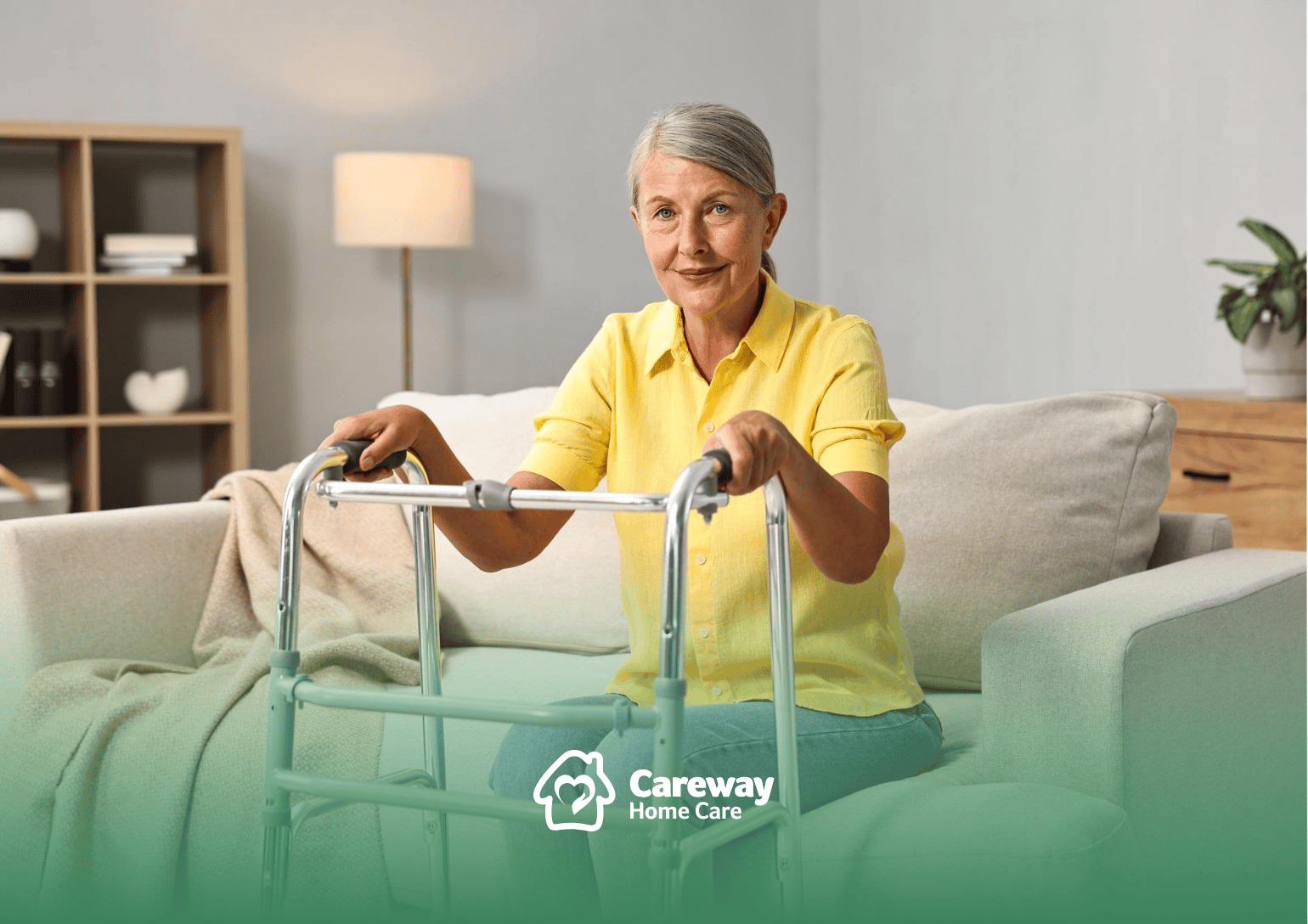
- Rollators (wheeled walkers with seats and hand brakes) are ideal for seniors who need more support than a cane but still walk regularly. The built-in seat matters more than families expect—it allows a senior to rest mid-activity rather than pushing through fatigue.
- Standard walkers offer maximum stability but require lifting, which isn’t suitable for everyone.
- Stair lifts can preserve full access to two-story homes. They’re a significant investment but often far less than the cost of moving or renovating to a single-floor setup.
- Transfer benches and bed rails support the in-between moments, getting in and out of bed, shifting from a wheelchair to a chair, where many falls occur.
Real-Life Example: We worked with a client in her late seventies who had stopped using her second floor entirely after a minor stumble on the stairs. Her bedroom, her sewing room, and most of her memories lived upstairs. After a home assessment and the installation of a stair lift, she regained access to her entire home and told her daughter she “felt like herself again” for the first time in two years.
That’s what the right aid can do.
Bathroom Aids: Where Safety Matters Most
The bathroom is the single most dangerous room in the house for older adults. Wet surfaces, hard fixtures, and small spaces create a high-risk environment.
Here are the aids that make the biggest difference:
- Grab bars installed near the toilet and inside the shower (properly anchored into studs, not drywall)
- Raised toilet seats to reduce the distance from standing to sitting
- Shower chairs or transfer benches to allow seated bathing
- Handheld showerheads for better control and seated use
- Non-slip bath mats both inside and outside the tub
- Long-handled sponges and brushes for reaching feet and back without bending
One caution from practice: suction-cup grab bars should never be considered safety equipment. They may feel secure, but they can release without warning. Always use properly installed, anchored bars.
Kitchen Aids: Cooking Safely and Comfortably
Many seniors give up cooking long before they need to. Arthritis, reduced grip strength, or difficulty standing for long periods can make the kitchen feel impossible.
Small adaptations bring it back within reach.
- Jar and bottle openers with ergonomic grips or electric versions eliminate the biggest frustration most seniors describe.
- Rocker knives allow one-handed cutting and require far less wrist strength than standard knives.
- Reachers and grabbers let seniors access items on high or low shelves without climbing or bending.
- Anti-slip cutting boards with built-in spikes to hold food in place make food prep one-handed.
- Lightweight, non-slip dishware reduces breakage and makes meals less stressful.
- Kettle tippers for those who find pouring a full kettle difficult.
- Automatic shut-off appliances, like stoves, kettles, and coffee makers, provide a safety net against forgetfulness.
In our sessions with families, we often recommend starting with the single task the senior misses most. If it’s morning coffee, solve that first. The confidence boost from reclaiming one beloved activity often motivates broader changes.
Dressing and Grooming Aids
Loss of fine motor control and flexibility makes buttons, zippers, and socks surprisingly difficult for many older adults.
A few inexpensive tools restore autonomy:
- Button hooks for seniors with arthritis
- Zipper pulls that extend the grip area
- Sock aids that hold socks open so they can be pulled on without bending
- Long-handled shoehorns to eliminate reaching toward the feet
- Elastic shoelaces that turn any shoe into a slip-on
- Weighted utensils and toothbrushes for seniors with tremors
These aids matter beyond function. Getting dressed independently, even with help from a tool, is fundamentally different from being dressed by someone else.
Technology Aids: Easier Than Seniors Expect
There’s a common assumption that older adults struggle with technology. In our experience, that’s often more about the device being poorly designed for them than about unwillingness to learn.
Modern aids are increasingly senior-friendly:
- Medication management has been transformed by automatic pill dispensers that sort doses, alert at the right times, and can notify a family member if a dose is missed.
- Voice assistants like Amazon Echo or Google Home let seniors set timers, call family members hands-free, play music, and get weather updates — all without touching a screen.
- Medical alert systems with fall detection can summon help automatically even if the wearer is unconscious.
- Smart doorbells allow seniors to see who’s at the door without walking to it.
- Simplified smartphones like the Jitterbug or senior-mode settings on standard phones keep seniors connected without overwhelming them.
- Smart lighting that turns on automatically at dusk or when motion is detected helps prevent nighttime bathroom falls.
We’ve watched technology anxiety vanish in seniors who, once set up properly, use voice commands dozens of times a day within a week.
Daily Living Aids at a Glance
| Area of Need | Recommended Aids | Key Benefit |
|---|---|---|
| Mobility | Canes, rollators, walkers, stair lifts, transfer benches | Prevents falls, preserves home access |
| Bathroom | Grab bars, shower chairs, raised toilet seats, and handheld showerheads | Reduces the highest-risk fall location |
| Kitchen | Jar openers, rocker knives, reachers, anti-slip boards, and auto shut-off appliances | Keeps cooking and nutrition accessible |
| Dressing | Button hooks, sock aids, long shoehorns, elastic laces | Preserves dignity and routine |
| Medication | Automatic dispensers, reminder apps, pill organizers | Prevents dangerous dosing errors |
| Safety & Alerts | Medical alert systems, fall detection, smart doorbells, motion lighting | Summons help quickly in emergencies |
| Communication | Voice assistants, simplified phones, and video calling devices | Reduces isolation, maintains connection |
Matching the Right Aid to the Right Person
One of the biggest mistakes families make is assuming that what worked for a friend’s parent will work for theirs.
It usually doesn’t.
A 75-year-old with mild arthritis needs different tools than an 85-year-old recovering from a stroke. A senior with Parkinson’s has different priorities than one with macular degeneration.
A proper assessment considers:
- Current physical abilities and limitations
- Cognitive status
- Home layout and hazards
- Existing routines that the senior values
- Medications and how they affect balance, strength, or alertness
- The senior’s own preferences and comfort level
Occupational therapists are trained specifically in this kind of assessment. A single home visit from a qualified OT can identify gaps that families living with a loved one may have stopped noticing.
Professional caregivers who spend regular time in the home also bring valuable insight, often spotting changes in ability before they lead to injury.
Introducing Aids Without Wounding Pride
Here’s a truth that’s often overlooked: many seniors resist daily living aids not because they don’t need them, but because accepting them feels like surrender.
How you introduce these tools matters enormously.
Avoid framing aids as accommodations for weakness. Instead, frame them as tools that make daily life easier, the same way a younger person uses a kitchen gadget or smartphone. No one thinks of their dishwasher as a “dish-washing aid for the mobility-impaired.”
Bring the senior into the decision. Show them options. Let them try items in a store. Let them choose colors or styles. A grab bar that matches the bathroom finish, a cane that looks elegant rather than medical — these small choices change everything about how an aid is received.
We’ve seen seniors who initially refused a shower chair begin using it happily once they chose one themselves.
Ownership creates acceptance.
When Aids Aren’t Enough
Daily living aids are powerful, but they have limits.
Some situations call for more regular caregiving visits, meal preparation support, medication management, transportation, or companionship to combat isolation.
Signs that aids alone may not be sufficient:
- Repeated falls despite home modifications
- Unexplained weight loss or skipped meals
- Medication errors or missed doses
- Personal hygiene decline
- Increased confusion or memory issues
- Social withdrawal
- Unpaid bills or neglected household tasks
None of these means a senior has to leave home. They mean the care plan needs more than tools — it needs people.
Building a Home That Supports Independence
The goal of daily living aids isn’t to turn a home into a medical facility. It’s the opposite — to make a home feel like home for as long as possible, even as needs change.
With thoughtful choices, proper assessment, and a willingness to revisit the plan as life evolves, most seniors can continue living independently in the homes they love.
If you’re navigating these decisions for a parent, spouse, or yourself, we’d encourage you to start small and build from there. The first aid you introduce is often the hardest. Everything after that gets easier, because the seniors see for themselves that these tools don’t represent loss. They represent the ability to keep going.
At Careway Home Care, we help families across Pennsylvania identify the right daily living aids, introduce them respectfully, and pair them with the kind of compassionate caregiving that fills in the gaps tools can’t reach. Whether you need a professional home assessment, guidance on specific products, or ongoing in-home care to keep a loved one safe and thriving, we’d be honored to walk that journey with you. Contact us today!
Frequently Asked Questions
1. How much do daily living aids typically cost?
Costs range widely. Simple items like reachers, jar openers, and long-handled sponges often cost $10–$30 each. Grab bars professionally installed typically run $100–$300 per bar. Rollators cost $100–$400, shower chairs $50–$200, and raised toilet seats $40–$150. Larger investments like stair lifts range from $3,000–$5,000 for straight stairs. Medicare Part B may cover certain durable medical equipment when prescribed by a physician, and many nonprofits and state programs offer assistance for lower-income seniors.
2. Does Medicare cover daily living aids?
Original Medicare covers some aids classified as “durable medical equipment,” including walkers, wheelchairs, hospital beds, and commodes, when prescribed as medically necessary. It typically does not cover items considered non-medical, like grab bars, shower chairs, or raised toilet seats. Medicare Advantage plans may offer broader coverage. Always check with your specific plan or speak with a social worker who can navigate the details.
3. Where should families start when a loved one’s abilities begin to change?
Start with a professional home safety assessment. An occupational therapist or geriatric care manager can walk through the home, evaluate the senior’s current abilities, and recommend targeted changes. Trying to buy aids without an assessment often leads to wasted purchases and overlooked hazards. If a formal assessment isn’t possible, at minimum, focus on the bathroom first, since it’s statistically the most dangerous room.
4. How do we introduce aids to a senior who insists they don’t need them?
Lead with purpose, not limitation. Instead of “you need this because you might fall,” try “this will help you keep doing what you love.” Involve them in choosing the product. Start with one aid for one specific task they find frustrating. Once they feel the benefit, they often request additional tools on their own. If resistance persists, a conversation with their physician, whom they may trust more than family on health matters, can be effective.
5. How often should a senior’s daily living aids be reassessed?
At minimum once a year, and anytime there’s a significant health change — a hospitalization, a fall, a new diagnosis, or noticeable decline in strength or cognition. Needs evolve, and an aid that was perfect two years ago may be inadequate (or unnecessary) now. Regular reassessment also identifies new aids that have become available.
Sources:
- https://www.cdc.gov/falls/data-research/facts-stats/index.html
- https://medium.com/wise-well/the-most-dangerous-room-in-the-home-7bdffb0e7ef5
- https://www.nia.nih.gov/health/osteoarthritis/osteoarthritis
- https://pmc.ncbi.nlm.nih.gov/articles/PMC5179315/
- https://pmc.ncbi.nlm.nih.gov/articles/PMC12243416/